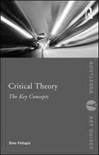
Critical Theory: The Key Concepts (Routledge, 2015; 416 pages) introduces over 300 widely used terms, categories and ideas drawing upon well-established approaches like new historicism, postmodernism, psychoanalysis, Marxism and narratology as well as many new critical theories of the last twenty years such as Actor-Network Theory, Global Studies, Critical Race Theory and Speculative Realism. This book explains the key concepts at the heart of a wide range of influential theorists from Agamben to Žižek. Entries range from concise definitions to longer more explanatory essays and include terms such as: aesthetics, desire, dissensus, dromocracy, hegemony, ideology, intersectionality, late capitalism, performativity, race and suture.
I am the general editor for the Wiley-Blackwell Encyclopedia of Victorian Literature (2015). The associate editors of the collection are Pamela K. Gilbert and Linda K. Hughes. The collection, which is four volumes and 1,000,000 words, brings together almost 300 scholars discussing authors, genres, and topics tied to Victorian literature. The collection has an online version with some of the essays linked to articles in BRANCH. Together, BRANCH and the Encyclopedia offer users a wealth of information about the period 1832-1910.
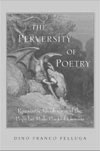
The Perversity of Poetry: Romantic Ideology and the Popular Male Poet of Genius (SUNY Press, 2005). Available in paperback as of Jan. 1, 2006. No study has explored the reason why such contending claims were made for poetry in the nineteenth century: that it is a panacea for the ills of the age and that it is a pandemic at the heart of the social order. The former position was originally associated particularly with Scott's poetry; the latter with Byron's, while Tennyson assumed a position between the two. In exploring the logic behind these attributions, Perversity brings to light a host of previously unexplored medical and historical material while arguing that the medical rhetoric associated with all three authors served to undercut the surprising influence of these poets on the emergent mass market, on political ceremony, and on revolutionary radicalism.
BRANCH is Britain, Representation and Nineteenth-Century History, 1775-1925, an experiment in scholar-driven, born-digital Web publication. I am the creator, designer, and general editor of this site. Articles are of variable length and tied to events on a timeline, with many articles self-reflexively questioning the very notion of 'event' and 'temporality.' All articles have undergone peer-review, revision, copy-editing, and proofing. Over 300 scholars from around the world are scheduled to publish articles through 2016. BRANCH is an arm of RaVoN: Romanticism and Victorianism on the Net.
RaVoN: Romanticism and Victorianism on the Net. With Michael Eberle-Sinatra, I was co-founder of this journal and served as Victorian editor from 1996-2014. RaVoN (the continuation of Romanticism on the Net, 1996-2006) is an international refereed electronic journal devoted to British Romantic and Victorian studies.
Introductory Guide to Theory: I began creating this web site in 2001; it now averages approximately one million page views per year. The Guide to Theory is a resource for the teaching and learning of critical theory, including sections on Postmodernism, Psychoanalysis, Narratology, Marxism, New Historicism, and Theories of Gender and Sex. I have now completed a paper-based version of the site for Routledge's Key Concepts series. Click here to read Elaine Showalter's discussion of my web material.
NAVSA (North American Victorian Studies Association). I helped to found this organization in 2002 and I was president from 2003-2014. I now serve as NAVSA's Webmaster. NAVSA was created to provide a continental forum for the discussion of the Victorian period, to encourage a wide variety of theoretical and disciplinary approaches to the field, and to further the interests of scholars of the period through grants, awards, regular and supernumerary international conferences, and its blog and twitter feed.
NINES (Networked Infrastructure for Nineteenth-century Electronic Scholarship), which has been supported by over $2,000,000 from the Mellon foundation and is now funded by the U of Virginia, is a project to found a publishing environment for integrated, peer-reviewed online scholarship centered in nineteenth-century studies, British and American. I was on the founding Steering Committee of NINES, currently head up its Victorian editorial board, and serve as associate director.
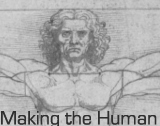
HONR 299: Making the Human. Last taught: Spring 2014. This course asks the question: how did we come to be who we are? To answer that question, we aim throughout to think like anthropologists, examining the most important moments in the modern understanding of the human in the Western world, with an eye always to the changes happening today because of the digital revolution. Each moment of transition is accompanied by a shift in technologies of communication: the move from orality to literacy (ancient Greece); the introduction of print (Renaissance Italy and England); the industrial revolution (19th- and 20th-century England and America); the digital revolution (our postmodern present). All aspects of the human will be explored: visuality, space, time, psychology, knowledge, faith, government, art, architecture, music, science, urban space, discipline and punishment.
HONR 299: Making the Human in Venice. Last taught: Maymester 2015. “Making the Human in Venice” will take students to the Veneto, Italy, for Maymester and will have as its textbook the empire of Venice itself. On a typical day, the class might begin in a classroom for lecture and discussion of a particular building, art work, or sculpture, and then move out into the city of Venice and its region to experience first-hand that place or object. Theory, in other words, will always meet up with practice, as students quite literally wander through the landscape of their study.
English 373H: Science Fiction and Fantasy. Subtitle: "Learning Theory through Pop Culture." Last taught: Fall 2016. This course addresses a number of issues in contemporary culture through the popular science fiction and fantasy works we view, specifically postmodernism, our contemporary carceral culture, politics and power, and late capitalism. The course also serves as an introduction to the major theories currently influencing English and cultural studies: narratology, theories of gender and sex, postmodernism, theories of ideology, and psychoanalysis. It serves as an example of how one can use my Guide to Theory in the classroom.
English 241: British Survey, Romanticism to the Moderns. Last taught: Spring 2015. This course seeks to understand the development of literature through the last two centuries. The class also seeks to understand and appreciate poetry: how does one read poetry? How does one analyze verse form? How does one make sense of poetic "license"? As a result, a significant part of each class is spent analyzing individual poems, particularly shorter lyrics. Examples of the novel and the novella are also examined.
English 337: Nineteenth-Century English Literature. Subtitle: "Poetry in an Age of Prose." Last taught: Spring 2008. This course instructs students in the development of literature from the eighteenth and into the twentieth century, concentrating specifically on poetry. The course also seeks to understand and appreciate verse: how does one read poetry? How does one analyze verse form? How does one make sense of poetic "license"?
English 230: Great Narrative Works. Subtitle: "The Building Blocks of Epic." Last taught: Fall 2000. This course takes the class designation at its word—"great narrative works." That is, we not only read narrative texts but also attempt to understand how and why a great narrative works. What are a good story's building blocks? More specifically, we examine the building blocks of the generic form that is considered the primary example of "great" narrative—the epic.
Honors 199: Telling the Holocaust. Last taught: Spring 2001. This class on the Holocaust was funded by a Lilly Retention Initiative Grant of $10,000, plus $1,000 for library acquisitions. The grant paid for a number of special events, including internationally renowned visiting speakers, the production of a Bertolt Brecht play, a visit to two Holocaust memorials in Chicago, and the construction of a Holocaust memorial.
ENGL 648: The Verse Novel. Last taught: Fall 2015. This course explores the Victorian verse novel, which rose to prominence in the 1850s and 1860s to interrogate such issues as genre, gender, form, ideology, domesticity, and nationhood. We examine Alfred Lord Tennyson's Idylls of the King, Robert Browning's Ring and the Book, Elizabeth Barrett Browning's Aurora Leigh, Arthur Clough's Amours de Voyage, and George Meredith's Modern Love.
ENGL 547: British Romanticism. Last taught: Fall 2007. The nineteenth century has often been dubbed the ‘age of history’. In this class, we take that designation seriously by paying attention to the ways the Romantics at once engage with and turn away from historical events. We will also discuss the predominant critical maneuvers of Romantic scholarship over the last three decades, particularly the rise of New Historicism, Cultural Materialism, and Cultural Studies. How exactly has Romantic scholarship been transformed because of these recent critical trends? The course therefore organizes its material by date rather than by author and we spend a good amount of time thinking about what exactly is happening in the world surrounding the Romantics.
English 548: Victorian Literature. Last taught: Spring 2009. This class has two goals: 1) I want students to come out of the course with a stronger understanding of poetry analysis, including the use of scansion to support theoretical arguments; 2) I want to provide a snapshot of the current state of scholarship on the field. In support of the first goal, I have students provide close readings of selected poetry as a preparation for each class. In support of the second goal, we read material from a series of books that seek to provide students with a view of current work on Victorian poetry, particularly the Blackwell Companion to Victorian Poetry and the recent Victorian Poetry special issue, "Whither Victorian Poetry?"
English 696T: Learning Theory through Pop Culture. Last taught: Fall 2016. This class seeks to explain and exemplify various theoretical approaches to literature and culture by way of popular entertainment. The class functions as a thorough and rigorous analysis of some of the most perplexing and pervasive issues in and ideological contradictions of our contemporary postmodern world, examined through the lens of pop culture. The course also clarifies some of the major theories currently influencing cultural criticism today, even as we implement the tools of cultural critique throughout the semester.
English 696T: Technology of the Book. Last taught: Spring 2004. This course seeks to understand how various changes in technologies of communication have transformed the very structure of human consciousness: from orality/literacy debates to the Gutenberg revolution to the industrial revolution of the nineteenth century to the digital and media technologies of the postmodern period.
English 647B: Byron. Last taught: Fall 2014. This course explores the phenomenon of Byron (his incredible mass-market popularity in the nineteenth century, the attacks against his morality, his influence on the figuration of poets in general) and also examines in detail all of Byron's major work. In so doing, students come away from the course with a strong understanding of the most important themes and issues of the Romantic period.
English 649A: 19th-Century Medievalism. Last taught: Spring 1999. The course examines the emergence of medievalism from the end of the eighteenth century to the cusp of the twentieth century. Because it was coincident with the very formation of "the academy," the "mass market," and a "popular" readership, the rise of nineteenth-century medievalism allows us to interrogate both the parameters and the methodology of a cultural studies approach.
English 696T: Theory and the Holocaust. Last taught: Spring 2001. This class scrutinizes theory through the lens of the Holocaust with two distinct questions in mind: 1) in what ways does the Holocaust force us to question our understanding of such fundamental theoretical concepts as historical representation, narrative (grand or not), referentiality, aesthetic form, and reader response? 2) in what ways did the Holocaust set the necessary conditions for the work of the various theoretical schools and critics of the last 40 years (Foucault, deconstruction, postmodernism, and cultural criticism)?
English 632: Narrative Theory. Subtitle: "The Truth of Narrative." Last taught: Spring 1998. This seminar introduces students to the utility of structural, especially narratological, models for the analysis of not only literature but also politics and ideology. Two competing although interdependent paradigms for narrative are explored: the historical model and the fictional model. We also explore those instances where the two models intersect and the historical developments (from the Medieval period through the Postmodern) that led to their presumed and actual separation.